
English| EUR
Suggested for you
More currencies
Choose a language
Húsavík sits at the edge of Skjálfandi Bay, where nutrient-rich Arctic currents draw fifteen cetacean species into Icelandic waters each year. The season runs April through October, but sighting rates, species diversity, and sea conditions vary sharply by month. This guide breaks down what to expect across the calendar and when your odds peak.
Quick answer
June, July, and August are the best months for whale watching in Iceland, with Húsavík reporting sighting rates above 98 percent during this window. Humpback whales, minke whales, and white-beaked dolphins arrive in Skjálfandi Bay as the midnight sun extends daylight to twenty-four hours and plankton blooms draw feeding cetaceans close to shore. Blue whales pass through in late May and early June. September and October offer calmer seas and fewer tour groups, though species diversity narrows as migration begins.
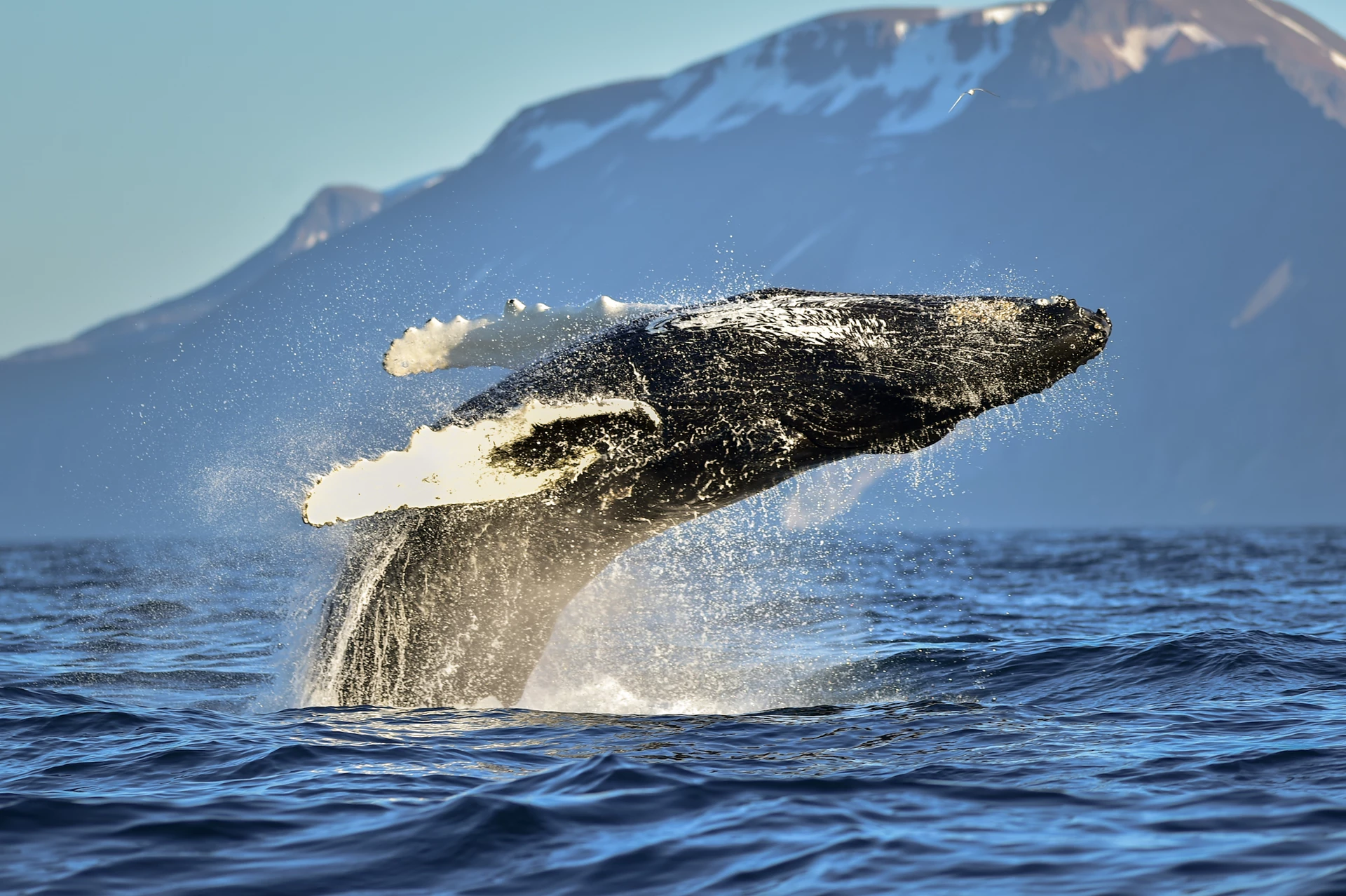
Húsavík's whale watching season aligns with the North Atlantic feeding cycle, not the calendar. Cetaceans follow herring and capelin into Skjálfandi Bay as ocean temperatures rise and phytoplankton blooms trigger the summer food chain. April and early May mark the season's opening, with minke whales appearing first as sea ice retreats northward. Sighting rates hover near seventy percent, and tours depend on weather windows between April storms. By mid-May, humpback whales return from Caribbean breeding grounds, and blue whales—the largest animals ever to exist—begin their migration along Iceland's northern coast. Blue whale sightings peak in the final two weeks of May and the first two weeks of June, a narrow window that draws researchers and photographers to the harbor. Summer transforms Skjálfandi Bay into Iceland's most reliable whale watching theater. June through August delivers near-constant daylight, stable sea conditions, and the year's highest species count. Humpback whales dominate sightings, often breaching within two kilometers of Húsavík's harbor, while white-beaked dolphins hunt in pods of twenty or more. Minke whales feed along the bay's western shore, and harbor porpoises appear in shallow water near the puffin colonies on Lundey Island. Tour operators run multiple daily departures, and the long daylight window means late-evening excursions benefit from golden-hour light and glass-calm seas. What month is best for whale watching in Iceland depends on what you prioritize: July offers the highest odds of multiple species in a single trip, while late June increases your chance of seeing blue whales before they move into deeper Arctic waters. September and October extend the season as autumn storms build across the North Atlantic. Humpback whales linger through mid-September, feeding heavily before their return migration, and sighting rates remain above eighty-five percent until the final week of the month. October is unpredictable—some years hold steady through Halloween, others see departures drop by mid-month as weather closes the harbor. Tour frequency decreases, but smaller group sizes and lower prices appeal to travelers willing to accept shorter weather windows. The season's rhythm mirrors Iceland's own: a brief, intense summer compressed between long months of darkness, and a marine ecosystem that operates on opportunity rather than schedule. Húsavík's operators track sightings daily, and conditions shift fast enough that a week's difference in arrival can change what you see. Timing your visit around Iceland's whale watching season requires matching migration patterns to your tolerance for cold and crowds. Peak summer guarantees sightings but fills boats and accommodations across Húsavík. Shoulder months—late May and early September—offer the best balance of reliability, weather, and access to the bay's deeper wildlife calendar.
“Blue whale sightings peak in the final two weeks of May and the first two weeks of June, a narrow window that draws researchers and photographers to the harbor.”
The peak season for whale watching in Húsavík occurs from June through August, when migratory species are most abundant in Skjálfandi Bay. This window offers the highest probability of sightings alongside the most favorable maritime conditions.
Temperatures 10°C–15°C; longest daylight hours
Marine life is most active and frequent sightings occur during this period.
Temperatures 5°C–10°C; variable conditions
Shoulder months offer fewer visitors and a higher likelihood of spotting early or late migrants.
Temperatures -2°C to 5°C; cold
Winter operations are restricted due to weather, making this period less reliable for consistent whale activity.
Verdict: For the highest reliability, schedule your visit between June and August, aiming for the earliest morning departures to utilize the optimal arrival window.
The Húsavík harbor operations maintain consistent daily access to support whale watching departures throughout the season. Visitors may coordinate their arrival times with the following schedule.
Húsavík is located in Northeast Iceland on the shores of Skjálfandi Bay. The most practical approach for travelers is by car via Route 1, the Ring Road, followed by Route 85.
Route 1 to Route 85 toward Húsavík
Strætó Route 79 from Akureyri to Húsavík
To reach the harbor at Hafnarstétt, 640 Húsavík, plan your travel to align with the best arrival window of 08:00–19:00. Arriving within this timeframe helps avoid mid-day peak crowds and allows for calmer sea conditions.
Access to the Húsavík harbor area is free of charge. The total cost of a whale watching excursion depends entirely on the specific tour operator and the type of vessel selected.
Verdict: There is no cost to enter the harbor, while whale watching tour prices vary based on the provider and boat type chosen.
Húsavík's sub-Arctic conditions and ocean exposure demand specific preparation year-round.
Everything you need to know about what month is best for whale watching in iceland
While sightings occur throughout the season, many travelers find that what month is best for whale watching in iceland often falls between June and August. These summer months provide the most stable sea conditions and peak biological activity for humpback whales. Selecting the right window ensures you maximize your experience during the Húsavík whale watching season. Planning your trip when what month is best for whale watching in iceland aligns with your travel schedule is highly recommended.
Húsavík is widely recognized as the whale watching capital of the country, making it a premier location for your Húsavík whale and puffin tour. The sheltered Skjálfandi Bay provides an ideal habitat for various marine mammals. Many enthusiasts specifically seek out this region to enjoy a high success rate of sightings. Finding what month is best for whale watching in iceland is crucial to experiencing the full biodiversity of this coastal hub.
To avoid peak crowds and benefit from calmer sea conditions, we recommend arriving between 08:00 and 19:00. These hours often offer a more serene environment on the water. Many visitors find that an early morning or late evening departure enhances the tranquility of their maritime excursion. Knowing what month is best for whale watching in iceland is helpful, but timing your daily arrival correctly is equally vital for a comfortable experience.
Puffins are typically present in the region during the summer months, often nesting from May through mid-August. If you are specifically interested in these seabirds alongside whales, you should book your excursion during this window. It is a common mistake to visit after the colony has migrated back to the open ocean. Check seasonal schedules to ensure your travel dates align with the presence of these migratory birds.
Access to the harbor area itself is free of charge, as there is 0 ISK entrance fee for entry. Individual whale watching tours are priced separately by the operators. You can explore booking options via the official site to plan your budget accordingly. All financial transactions for tours are handled independently of harbor access.
Yes, the harbor area is accessible throughout the week from 08:00–20:00, Monday through Sunday. This generous schedule allows visitors to coordinate their arrival with various tour departures. Please refer to our site to manage your booking times effectively. Consistent access throughout the week ensures you can plan your visit around your broader Icelandic itinerary.
Preparation is key for a successful marine wildlife excursion in northern Iceland. Dressing in warm, windproof layers is essential regardless of when you travel, as sea temperatures remain cool. Ensure you arrive at the harbor with enough time to check in before your scheduled departure. Checking the local weather forecast frequently will help you prepare for the maritime conditions you might encounter.